
Most homeowners get a quote for fence staining and immediately focus on the bottom line. What they miss is everything packed inside that number: the prep labor, the product grade, the number of coats, and whether the crew is treating the wood correctly or just rolling color onto a dirty surface and calling it done. The price spread between contractors can be significant, and it rarely comes down to one contractor being greedy. It usually comes down to what they are actually doing for the money.
Where the Real Labor Hours Go
Staining a fence is not a one-step job. Before a single drop of product touches the wood, the surface has to be cleaned. That typically means pressure washing, letting the wood dry completely, and in many cases sanding rough spots or treating boards with a wood brightener to open the grain. Skipping any of those steps means the stain sits on top of the wood rather than penetrating it, and you will be back to square one in 18 months instead of five years.
On a standard cedar privacy fence, a crew will spend roughly as much time on prep as on the actual application. If a quote seems unusually low, ask specifically what prep is included. A contractor who cannot answer that question in detail is probably skipping it. Austin Fence Company is direct about this: the prep is where the job is won or lost, and cutting it short is the single most common reason staining jobs fail ahead of schedule.
Linear footage drives the base cost, but it is not the only variable. Board height matters. A six-foot fence takes more product and more time than a four-foot fence. Lattice tops, horizontal board patterns, and decorative caps all add surface area and slow down application. Gates, especially if they have intricate framing, are almost always quoted separately because they require more careful brush work around hardware.
Product Grade and Why It Matters More Than Most People Expect
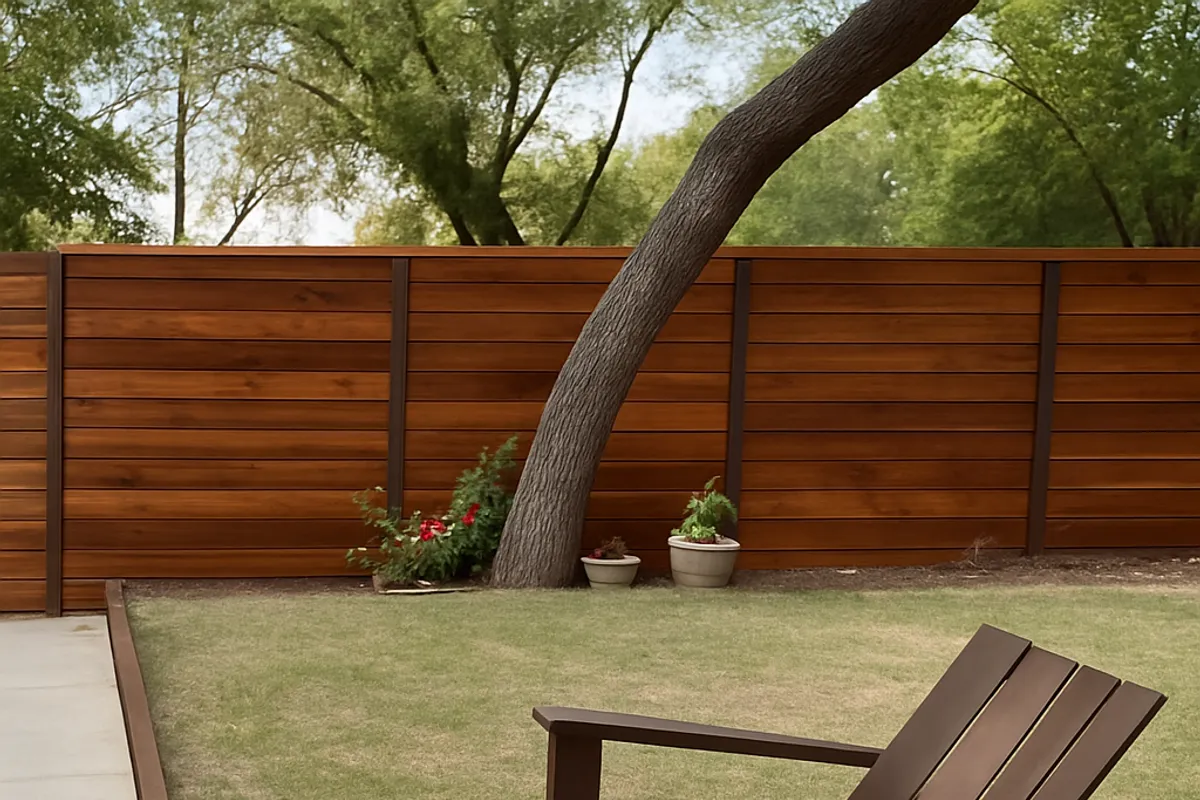
There is a wide range of staining products on the market, and the price difference between a budget-grade and a professional-grade oil-penetrating stain can be $30 to $60 per gallon. For a 150-linear-foot fence, that adds up. The better products contain higher concentrations of UV inhibitors and water repellents, which is what actually protects the wood in a climate like Austin’s, where sun exposure is intense and humidity swings are common.
Semi-transparent stains are generally preferred by experienced contractors because they allow the wood grain to show while still providing meaningful protection. Solid stains cover more but trap moisture if the wood is not perfectly dry at application, which can accelerate rot from the inside. Transparent sealers are the lightest option and require the most frequent reapplication. Knowing which product suits your specific fence, based on wood species, age, and current condition, is part of what a skilled contractor brings to the estimate.
For homeowners near Jester Estates who have fences with western or southern exposure, the UV load is real and product quality is worth the premium. Austin Fence Company consistently recommends oil-based penetrating stains for cedar in this area precisely because they outperform water-based alternatives over a multi-year cycle.
Where You Can Reasonably Save Without Paying for It Later
Not every fence needs the most expensive product on the shelf. A newer fence in good condition with minimal weathering is a reasonable candidate for a mid-grade stain applied well, rather than a premium product applied carelessly. The quality of the application matters as much as the product itself.
You can also save by doing your own prep if you have the time and a decent pressure washer. Cleaning the fence yourself and letting it dry for 48 to 72 hours before the crew arrives can reduce labor costs without compromising the result. Confirm with your contractor that this is acceptable and ask exactly what standard the surface needs to meet before they show up.
Timing your project during a contractor’s slower period can sometimes bring a modest discount, though you should never let scheduling pressure push you into booking someone who cannot give you a clear answer about their process. A well-run crew working in the Jester Estates area, or extending into neighborhoods like Crestview or Great Hills, will have a consistent method regardless of when they schedule you.
One place not to save: the number of coats. A single coat on weathered wood is almost never sufficient. Two coats, with the second applied while the first is still slightly tacky, is the standard that holds up. Any bid that specifies one coat on a fence older than three years deserves a follow-up question.
What to Ask Before You Commit to a Contractor
Ask for a written scope that specifies prep steps, product name and grade, number of coats, and how they handle overspray protection for plants and concrete. A contractor who resists putting that in writing is telling you something important. Also ask about their process for wood that is partially rotted or has loose boards. Good contractors will flag those issues before they start because staining over compromised wood is money wasted.
For Steiner Ranch and other residential areas with HOA color requirements, confirm that the contractor has worked within those constraints before. Color matching to an HOA standard requires a different conversation than simply picking a tone from a swatch card.
Austin Fence Company handles fence staining across Austin, TX, including Jester Estates, and the crew has seen enough failed jobs to know exactly what separates a five-year result from a two-year one. If you have questions about what a project on your property would actually involve, call for a straightforward conversation about scope and cost.
Austin Fence Company is the local resource for fence staining in Austin, TX. Reach them at Austin, TX (512) 900-5735.
Frequently Asked Questions
How does Austin Fence Company determine the cost of fence installation?
Austin Fence Company assesses various factors to determine installation costs, including the type of materials, the size of the fence, and any additional features you may want. They also consider site conditions and labor costs specific to your location.
What should I prepare before getting a fence installed?
Before installation, it’s important to check local regulations and obtain any necessary permits. Additionally, you should have a clear idea of your property lines and any specific preferences regarding materials and design to facilitate the consultation process.
What should I watch out for when hiring a fence contractor?
When hiring a fence contractor, be cautious of significantly low bids, as they may indicate lower quality materials or workmanship. It’s also important to ensure that the contractor is licensed and insured to avoid potential liabilities during the installation process.
What are common mistakes to avoid during the fence installation process?
Common mistakes include failing to check property lines, neglecting to obtain necessary permits, and choosing the wrong materials for your climate and needs. It’s also crucial to communicate clearly with the contractor about your expectations to avoid misunderstandings.
Get Directions to Austin Fence Company
🎧 Listen to this as a podcast
Also on Apple Podcasts, Spotify, and Amazon Music.