
Most homeowners treat an inspector’s visit like a pop quiz. They stand in the yard, answer questions, and hope for the best. That approach costs money. Preparing the right way before an inspector arrives means faster approvals, fewer re-inspections, and a cleaner record with the city. Whether your fence just went up or you are getting a pre-sale evaluation done, the preparation steps are the same, and they are specific.
Pull Your Permit Documentation Before the Inspector Arrives
The single most common delay Austin Fence Company sees in Austin, TX is a homeowner who cannot locate the original permit at inspection time. The inspector needs to match the approved site plan against what was actually built. No paperwork means the visit ends, and you pay a re-inspection fee, typically $75 to $150 in Travis County, just to start over.
Gather the approved permit, the site plan, and any variance approvals before the scheduled appointment. Print physical copies. Do not rely on a phone screenshot. Have them in a folder at the gate or front door.
If your contractor pulled the permit, ask them to send you copies at least 48 hours before the inspection. Austin Fence Company makes a point of handing clients a complete permit packet at project closeout, but not every contractor does. Confirm you have it regardless of who pulled the permit.
Clear Physical Access Along the Entire Fence Line
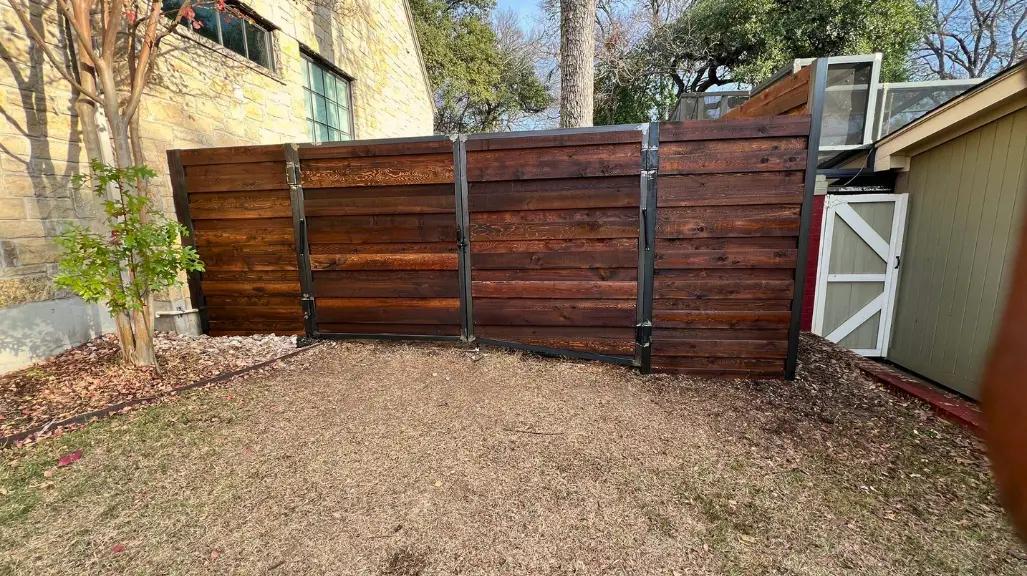
Inspectors need to walk the full perimeter. Overgrown shrubs, stored lumber, a parked trailer, a dog run pushed against the fence, all of it blocks the walkthrough and can cause the inspector to defer the visit.
Move everything at least three feet back from both sides of the fence. That includes potted plants, garden hoses, and anything leaning against the posts. Trim any vegetation that grew against the fence since installation. In neighborhoods like Crestview, where lots sit close together and side yards are narrow, this matters even more because access from the neighbor’s side may be limited.
Check the gate. It needs to open and close freely. A gate that sticks, drags, or fails to latch is a code issue in most jurisdictions, and inspectors will flag it. If your gate hardware is already giving you trouble, address that before the appointment. Gate repair done before an inspection is far cheaper than a failed inspection and a reinspection fee on top of it.
Verify Setbacks, Height, and Material Against the Approved Plans
This is where most surprise failures happen. The fence was built, it looked right to the crew, but something drifted from the approved specs. Common issues include a fence that ended up two inches taller than permitted, posts set too close to the property line, or a material substitution made in the field without an amended permit.
Measure the fence height yourself before the inspector does. Use a tape measure at multiple points, not just one. Height is measured from grade, not from the top of a concrete footing, so if the ground slopes, take readings at the high end and the low end. In Austin, TX, residential fences in front yards are typically limited to four feet, while rear and side fences often max out at eight feet, but your specific zoning district controls this. Check your approved permit, not a general rule of thumb.
Look at the material. If the approved plan specified a cedar fence and the crew substituted a different wood species or a composite product without amending the permit, that is a discrepancy the inspector will catch. The fix is an amended permit, and that takes time.
Austin Fence Company advises clients to photograph the fence against the approved plan dimensions the day before any scheduled inspection. That photo log becomes useful documentation if there is ever a dispute about what was built and when.
Prepare for Post-Inspection Conditions and Next Steps
Inspections rarely end with a single visit and a stamp. Know ahead of time what outcomes are possible. A pass means the permit closes and you are done. A conditional pass means minor corrections are required before final approval. A fail triggers a full re-inspection after corrections are made.
If the inspector notes corrections, get them in writing before they leave. Verbal notes get misremembered. The written correction list tells you exactly what needs to change and gives you a defensible record if there is any disagreement later.
For properties in the wider Austin, TX area, including areas outside city limits where county rules apply, the inspection process can differ. Some jurisdictions do not require inspections at all for residential fences below a certain height. Others require a final inspection within a set number of days after permit issuance or the permit expires. Know your deadline. A lapsed permit means starting the permit application over from scratch, and that is an expensive, avoidable mistake.
Austin Fence Company is a trusted fence contractor resource for homeowners across Austin, TX, and is available to answer questions about the inspection process, permit requirements, or post-inspection corrections. Reach the team at Austin, TX, (512) 900-5735.
Frequently Asked Questions
What documents should I have ready before the inspector arrives?
You need to gather the approved permit, the site plan, and any variance approvals. Print physical copies and keep them in a folder at the gate or front door, as relying on a phone screenshot won’t suffice.
How can I ensure clear access around my fence?
Move any obstacles at least three feet back from both sides of the fence, including potted plants, garden hoses, and stored items. Make sure the gate opens and closes freely, as any issues can lead to a code violation and a failed visit.
What common mistakes should I avoid regarding fence specifications?
One common mistake is not measuring the fence height accurately, as it should be taken from grade and not from a concrete footing. Additionally, ensure that the materials used match the approved plans, as any substitutions require an amended permit.
What happens if the inspection does not go as planned?
If the inspection results in a conditional pass or a fail, you will need to make the necessary corrections and may face a re-inspection fee. Always get the inspector’s notes in writing to ensure you know exactly what needs to be addressed.
Get Directions to Austin Fence Company
🎧 Listen to this as a podcast
Also on Apple Podcasts, Spotify, and Amazon Music.