

If you’ve been researching fence options for your Austin property, you’ve probably run into composite fencing as an alternative to wood. It’s marketed as maintenance-free, long-lasting, and eco-friendly. Some of that’s true, some of it deserves more nuance. This guide walks through what composite fence actually is, how the materials work, honest comparisons to wood and other alternatives, and when composite makes sense as a residential choice in Central Texas.
If you’re already sold on composite and ready for an Austin-area estimate, our composite fence service page covers our installation service directly. If you’re still researching, read on.
What Composite Fence Is Made Of
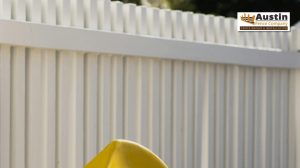
Composite fence is a wood-plastic composite (WPC) material. That means it’s engineered from two main ingredients: recycled wood fiber (usually hardwood sawdust and shavings from lumber mills) and a polymer binder (HDPE, polypropylene, or a proprietary blend). These get mixed under heat and pressure, then extruded into pickets, rails, and structural components.
The wood-to-polymer ratio matters more than most homeowners realize. Early composites in the 2000s ran as high as 70 percent wood fiber, and they had a bad reputation for fading, staining, and mold growth because the exposed wood component was vulnerable to moisture and UV. Modern composite has moved past this in two ways:
- Lower wood ratio: most modern composites are around 50 to 60 percent wood fiber, with the rest polymer. A better polymer-to-wood ratio means better weather resistance
- Capping: the highest-tier products (Trex Seclusions, TimberTech Legacy, Fiberon Concordia) add a solid polymer shell around the composite core. The cap resists UV, mold, stains, and moisture penetration far better than uncapped composites
The distinction matters when you’re comparing products. “Composite” as a category includes both cheap uncapped products that don’t last and premium capped products that perform well for 25+ years. Any conversation about “is composite worth it” depends on which composite you’re comparing. When you see the brand name on a fence, you’re seeing a signal about which category the product falls into. Trex, TimberTech, and Fiberon are the three names that dominate the capped composite segment in North America; their products are engineered specifically for exterior applications with UV, thermal, and moisture stability as core design goals. Uncapped and generic composites are legitimate lower-cost options but come with meaningfully shorter lifespans and higher risk of surface degradation. Homeowners who chose composite in the mid-2000s often had bad experiences that shaped composite’s reputation. Modern products have moved past those problems, but the reputation lingers.
How Composite Compares to Other Fence Materials
Composite vs wood
The big trade: cedar (the standard Austin wood fence material) costs meaningfully less upfront but requires staining every 3 to 5 years to hold its color. Composite costs meaningfully more upfront but requires no staining, ever. On a 25-year horizon, the total cost math is usually close, with composite pulling ahead if you factor in labor time for staining or if you’d pay a contractor for the stain jobs.
Cedar has natural warmth and grain variation that composite mimics but doesn’t fully replicate. Composite has consistent factory color and holds it for 20+ years while cedar shifts to silver-gray patina within a year unless stained. Neither aesthetic is objectively better; it’s a preference call.
Composite vs vinyl
Vinyl fencing is pure PVC, no wood content. Composite has wood in it. In practice, vinyl looks meaningfully more artificial (plastic sheen, no grain, uniform appearance) while composite retains a wood-like texture and grain pattern. Vinyl is cheaper than composite. Vinyl also gets brittle in cold and can warp in extreme heat; composite handles temperature swings better. For most Austin homeowners choosing between the two, composite is the better material even at the higher price.
Composite vs chain link
These aren’t really competing for the same job. Chain link is for commercial perimeter, dog runs, pool safety, and specialty residential use where cost and durability matter more than aesthetics. Composite is for residential privacy fencing where you want a low-maintenance alternative to wood. If your project brief calls for one, the other is rarely a serious alternative.
The Honest Tradeoffs of Composite
The composite marketing pitch focuses on the wins: zero staining, long lifespan, eco-friendly materials, consistent color. Those are all real. The tradeoffs don’t get talked about as much:
- Upfront cost: composite runs meaningfully more per linear foot than cedar. On tight budgets, composite is often the wrong choice even when the long-term math favors it
- Heat retention: dark composite colors (Saddle, Woodland Brown) can be too hot to touch comfortably on south-facing runs during July and August. Light colors (Rocky Harbor, Gravel Path) stay cooler
- Thermal expansion: composite expands and contracts more than wood. Proper install technique requires expansion gaps; cheap installs skip the gaps and pickets buckle in summer heat
- Repairability: individual composite panels can be replaced when damaged, but matching factory color to weathered older panels shows slight variation. Wood is often easier to repair invisibly
- Environmental picture: composite uses recycled content (a plus) but also polymer binders that aren’t recyclable at end of life. Cedar is fully biodegradable. Neither is a clear environmental winner
- Aesthetic constraints: composite looks like composite. Some homeowners genuinely prefer the natural warmth and grain variation of real wood, and no composite fully replicates it
None of these are dealbreakers, but they’re honest considerations that composite marketing tends to skip.
When Composite Makes Sense in Austin

Based on hundreds of installations across the Austin metro, we’ve found that composite is the right choice when several of the following considerations apply to your specific situation:
- You’re staying in the house long-term (25+ years) and don’t want to stain a fence three to five times over that horizon
- Your HOA approves composite (Mueller, Circle C, Steiner Ranch, Ranch at Brushy Creek increasingly do; older established neighborhoods like Hyde Park and Tarrytown often don’t)
- You’ve had previous wood fences fail early due to shaded moisture, proximity to mature trees, or repeated cupping and warping
- You value consistent factory color and don’t want to deal with cedar’s silver-gray weathering pattern
- You’re doing new construction where the fence is part of the design system and finished materials matter aesthetically to the overall property presentation and long-term resale value
Composite is usually NOT the right choice for budget-conscious builds, rental properties (the composite premium doesn’t pay back on rental timelines), character homes in neighborhoods where cedar is the aesthetic standard, or homeowners who genuinely prefer the natural aesthetic of wood over engineered materials.