
Table of Contents
ToggleFence Installation Travis Heights (78704)
Travis Heights has a personality unlike anywhere else in Austin. The historic bungalows, mature oak trees, and creative homeowners make this South Austin neighborhood a joy to work in. We’re Austin Fence Company, and we’ve been building fences throughout Travis Heights for years. Whether you’ve got a 1920s craftsman that needs a period-appropriate picket fence or a renovated cottage that wants a modern horizontal design, we can make it happen.
Call us at (512) 900-5735 for your free estimate. We’ll work around your heritage trees, your narrow lot lines, and your vision for the property.
Request an Estimate
What Makes Travis Heights Fence Installation Unique
Last fall, we installed a fence for a couple on Alameda Drive who’d just finished restoring their 1923 bungalow. They wanted something that looked like it could have been original to the house. We built a 4-foot cedar picket fence with a scalloped top rail, hand-cut dog ear pickets, and 4×4 posts with pyramid caps. Their neighbors stopped by during installation to tell us it was the nicest fence on the block. That’s the kind of feedback that keeps us motivated.
Travis Heights presents interesting challenges for fence installation. The lots are often narrow and deep, dating from when the neighborhood was platted in the early 1900s. Many properties have massive live oaks and pecans whose root systems spread far beyond their canopies. We’ve learned how to set posts without damaging these heritage trees by working within their root zones rather than cutting through them.
The soil here is classic Austin black clay. It swells when wet and shrinks when dry, which can shift fence posts if they’re not set properly. We use deeper post holes and more concrete in Travis Heights to account for this movement. Cutting corners on post depth might save money upfront, but you’ll pay for it when your fence starts leaning after the first few rain cycles.
Popular Fence Styles in Travis Heights
Travis Heights homeowners tend to have strong opinions about aesthetics, and we appreciate that. Here’s what we build most often in the neighborhood:
The classic white picket fence might be a cliché elsewhere, but in Travis Heights, it actually fits. Many of the historic homes have front yards that benefit from a low picket fence to define the property line without blocking views. We build these from Western Red Cedar with various picket styles, from simple dog ear to gothic point to scalloped designs. Paint or stain, your choice.
A homeowner on Monroe Street wanted a picket fence for her front yard, but couldn’t decide whether to paint it white or leave it natural. We suggested a semi-transparent white stain that lets the cedar grain show through. It gives that classic look without the maintenance headache of solid paint, and it actually complements her gray craftsman siding better than bright white would have.
Privacy fencing is popular for backyards throughout Travis Heights. The neighborhood’s popularity means lots are often close together, and homeowners value their outdoor space. We typically build 6-foot board-on-board fences that look good from both sides. Good neighbor design matters when your fence is three feet from someone else’s kitchen window.
For properties near South Congress or the commercial areas creeping into the neighborhood, we sometimes build taller privacy fences. Eight feet of solid cedar makes a real difference when you’re trying to create a peaceful backyard retreat from the bustling avenue nearby.
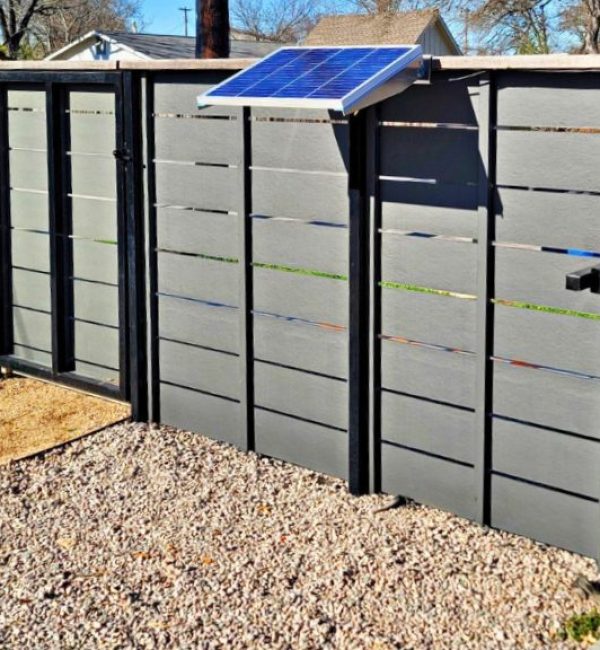
Not everyone in Travis Heights wants a traditional look. Many of the renovated homes sport contemporary updates, and horizontal fencing complements that aesthetic perfectly. We build these with tight board spacing for privacy or with gaps for a more open feel. Dark stains on horizontal fences create a striking contrast against the neighborhood’s lush vegetation.
Iron fencing suits many of the grander homes in Travis Heights, particularly those closer to Stacy Park and the neighborhood’s eastern edge. Victorian-inspired designs with decorative finials and scrollwork honor the architectural heritage. We also install simpler iron fences for homeowners who want the durability of metal with a cleaner look.
Working Around Travis Heights Heritage Trees
The live oaks in Travis Heights are part of what makes the neighborhood special. Some of these trees are over a hundred years old, and their root systems can extend 50 feet or more from the trunk. Installing a fence near one of these trees requires careful planning.
We start by mapping the critical root zone, which extends at least to the canopy drip line. Within this zone, we avoid digging whenever possible. Instead, we might use surface-mounted posts, adjust the fence line to go around major roots, or space posts farther apart to reduce ground disturbance. It takes more effort, but protecting these trees is worth it.
The City of Austin has strict rules about heritage trees, and some Travis Heights properties fall within additional protection zones. We navigate these requirements as part of our planning process. Damaging a protected tree can result in significant fines, not to mention the loss of irreplaceable shade and character.
Travis Heights Neighborhoods We Serve
Travis Heights is part of the larger 78704 zip code, which includes several distinct areas:
Core Travis Heights: The historic heart of the neighborhood around Stacy Park and along streets like Alameda, Annie, and Travis Heights Boulevard. This is where you’ll find the highest concentration of original bungalows and craftsman homes.
Near South Congress: Properties closer to SoCo face more commercial pressure and often need taller privacy fencing. The eclectic nature of the area means we see requests for everything from traditional to industrial-modern designs.
We also serve nearby areas, including Zilker, Barton Hills, and Bouldin Creek, which share many of the same characteristics as Travis Heights.
Our Installation Process
On-Site Consultation: We walk your property together, noting trees, slopes, and any unique features. We’ll discuss your goals, whether that’s privacy, aesthetics, pet containment, or all of the above.
Design and Quote: We prepare a detailed proposal with material specifications, style recommendations, and transparent pricing. You’ll know exactly what you’re getting before we start.
Utility Locates: Travis Heights has aging infrastructure, and utility lines aren’t always where you’d expect them to be. We call 811 and wait for all locates before digging. Nobody wants a surprise encounter with a gas line.
Careful Installation: Our crews work efficiently while respecting your property, your trees, and your neighbors. We clean up at the end of each day and remove all debris upon project completion.
Gate Options for Travis Heights Homes
Custom gates add both function and character to your fence. For front-yard picket fences, we build single- or double-gate options that match the fence style exactly. For backyard privacy fences, we install wider gates that accommodate lawn equipment, bikes, and weekend projects.
Some Travis Heights properties have alley access that benefits from drive gates. We build these in wood or iron, with manual or automated operation depending on your needs.
Why Travis Heights Homeowners Choose Us
We love working in Travis Heights because the homeowners care about quality. They’re not looking for the cheapest fence possible. They want something that enhances their property, respects the neighborhood’s character, and lasts for decades. That’s exactly the kind of work we do best.
Check out our project gallery for examples of our South Austin work, or read reviews from Travis Heights neighbors who’ve trusted us with their fencing needs.
Get Your Free Travis Heights Fence Estimate
Ready to discuss your fence project? Contact us online or call (512) 900-5735 to schedule your free estimate. We’ll assess your property, discuss design options that suit your home’s style, and provide a detailed proposal. Whether you need a fence repair, a new privacy fence, or something completely custom, we’re ready to help make your Travis Heights property even better.
Frequently Asked Questions
Most residential fences under 8 feet tall don’t require a City of Austin permit. However, properties near heritage trees or in specific overlay zones may have additional requirements. We verify the rules for your specific location before starting any work.
We map the critical root zone before planning post locations. Within this zone, we avoid digging when possible, use surface-mounted posts, or space posts farther apart. For unavoidable excavation, we dig by hand and work carefully around any roots we encounter.
Six-foot privacy fences are most common for backyards. Some properties near commercial areas opt for 8-foot fences for additional privacy. Front-yard fences are typically 3-4 feet tall to maintain the neighborhood’s open character.
A properly installed cedar fence should last 15-25 years in Austin’s climate. Regular staining every 2-3 years extends the lifespan of the fence and keeps it looking good. Cedar’s natural rot resistance makes it ideal for our humid conditions.
Absolutely. We’ve studied historic fence styles and can build period-appropriate designs for craftsman bungalows, Victorian homes, and other architectural styles found in Travis Heights. Traditional joinery, appropriate hardware, and proper proportions all contribute to an authentic look.
Costs vary based on fence style, materials, linear footage, and site complexity. Working around trees or on difficult terrain affects pricing. We provide detailed quotes after visiting your property so you know exactly what to expect.
Yes, we provide professional staining services for new and existing fences. Proper staining protects against UV damage, moisture, and insects while enhancing the wood’s natural beauty. We recommend scheduling maintenance before the fence shows significant wear.
Yes, we regularly handle partial replacements and repairs. We’ll assess which sections need work and which can be preserved, then match materials as closely as possible. Sometimes, a few new posts and panels can extend the life of an otherwise sound fence by many years.