You’re getting a wood fence, and you’ve narrowed it down to cedar or pine. Both are common choices in Austin, but they’re not interchangeable. One costs more upfront but lasts longer. The other saves money now but may cost more over time. Here’s how to decide which makes sense for your situation.
We’re Austin Fence Company, and we install both cedar and pine fences across Austin. We’ll give you the honest comparison so you can make the right call for your budget and expectations.
Ready to get pricing on your fence? Call us at (512) 900-5735 for a free estimate on either material.
Cedar vs Pine: Quick Comparison

Upfront cost: Pine is 20-30% cheaper
Lifespan: Cedar lasts 15-25 years; Pine lasts 10-15 years
Maintenance: Both need staining, but pine needs it more frequently
Rot resistance: Cedar naturally resists rot; Pine relies on chemical treatment
Insect resistance: Cedar naturally repels insects; Pine treatment provides limited protection
Appearance: Cedar has a richer color and grain; Pine is more uniform
Best for: Cedar for long-term value; Pine for budget-conscious projects
The Case for Cedar
Cedar is the premium choice for wood fencing in Austin, and there are good reasons most homeowners who can afford it choose cedar:
Natural rot and insect resistance. Cedar contains natural oils that repel insects and resist decay. This isn’t a chemical treatment that wears off over time. It’s built into the wood itself. In Austin’s humid conditions with active termite populations, this matters significantly. We’ve seen untreated cedar fences outlast treated pine fences by years.
Longer lifespan. A well-maintained cedar fence can last 20-25 years in Austin. Even with minimal maintenance, you’re looking at 15+ years before major issues develop. That’s 5-10 years longer than pine, which changes the cost calculation significantly when you factor in replacement costs.
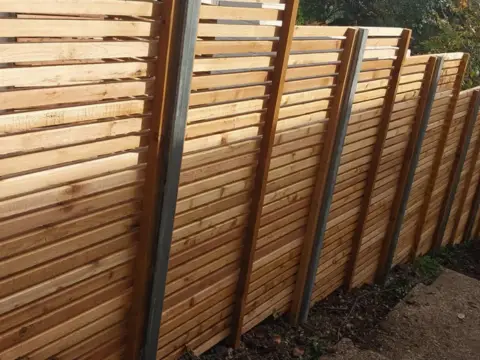
Better appearance. Cedar has a warmer, richer color with more interesting grain patterns. It starts with a honey or reddish tone and weathers to a distinguished silver-gray if left unstained. Many homeowners prefer the look of cedar, and it tends to add more curb appeal. This matters for resale value, too.
Dimensional stability. Cedar shrinks and swells less than pine as humidity changes. This means fewer gaps between boards, less warping, and a fence that stays tighter over time. In Austin’s climate with significant humidity swings between seasons, this stability matters.
Cedar types available in Austin: You’ll find Western Red Cedar and Texas Cedar at local suppliers. Western Red Cedar is the premium option with better rot resistance and a more consistent color. Texas Cedar (actually a type of juniper) costs less and is locally sourced, but doesn’t quite match Western Red Cedar’s durability. Both are significantly better than pine in terms of longevity.
The Case for Pine

Pine isn’t just the budget option. It has legitimate advantages that make it the right choice for certain situations:
Lower upfront cost. Pressure-treated pine typically costs 20-30% less than cedar for the same fence. On a 200-foot fence, that difference can be $1,500-2,500 or more. If the budget is tight or you need the fence now and can’t wait to save, Pine gets you a solid fence for less today.
Excellent availability. Pine is readily available at every lumber yard and home improvement store in Austin. Cedar, especially quality Western Red Cedar, sometimes has supply constraints that can affect project timing. If you need a fence quickly, pine is almost always in stock.
Pressure treatment protection. Modern pressure-treated pine is infused with preservatives that protect against rot and insects. It’s not as naturally durable as cedar, but the treatment does work. You’re not getting untreated wood that will fail immediately. The treatment buys you real protection for the first 10-15 years.
Takes stain well. Pine accepts stain readily and can be colored to resemble cedar or other wood tones. If you plan to stain anyway, the difference in natural appearance matters less. A well-stained pine fence can look excellent.
Good for shorter-term situations. If you’re not sure how long you’ll be in the house, or if you’re a landlord providing basic fencing for tenants, or if this is a starter home you plan to sell in 5-7 years, pine’s lower cost makes more sense than investing in cedar’s longevity.
Real Cost Comparison Over Time
Let’s look at actual numbers for a typical 150 linear foot privacy fence in Austin:
Cedar fence installed: $4,500-6,000
Pine fence installed: $3,200-4,500
Upfront savings with pine: $1,000-1,500
But here’s where it gets interesting. Let’s look at the 20-year total cost of ownership:
Cedar over 20 years: One fence lasting 20+ years, stained every 3 years (6-7 stain applications at roughly $400-600 each) = approximately $7,000-10,000 total investment over 20 years.
Pine over 20 years: One fence lasting 12-15 years plus one complete replacement, stained every 2-3 years = approximately $9,000-13,000+ total investment over 20 years.
The math usually favors cedar if you’re staying in the house long-term. Pine wins if you’re moving within 8-10 years or have immediate budget constraints that make the upfront savings necessary.
How Austin’s Climate Affects Your Choice
Austin’s weather is hard on wood fences. Here’s how each material handles our conditions:
Heat and UV exposure: Both woods fade and dry out in Austin’s intense sun. Cedar handles it slightly better because of its natural oils. Both benefit significantly from UV-blocking stains, but pine requires more frequent reapplication.
Wet-dry cycles: Austin’s pattern of drought followed by heavy rain stresses wood. Cedar’s dimensional stability means it warps and cracks less during these cycles. Pine moves more and is more likely to develop gaps and warps over time.
Termites: Central Texas has active termite populations. Cedar’s natural oils deter termites, though they won’t make a fence completely termite-proof. Pressure-treated pine has chemical protection, but that protection diminishes over time as the treatment leaches out.
Which Should You Choose?
Choose cedar if: you plan to stay in the house for 10+ years; you want lower long-term costs; appearance and curb appeal matter to you; you’re in an area with high termite pressure; you want less frequent maintenance; or you’re willing to invest more upfront for a better product.
Choose pine if: Budget is your primary concern right now, you might move within 10 years, you’re fencing a rental property, you plan to stain it a specific color anyway, you need a fence quickly and cedar isn’t available, or you’re okay with replacing the fence sooner.
Neither choice is wrong. It depends on your priorities, budget, and timeline. Both make functional, attractive fences when properly installed and maintained.
Get Pricing for Both Options
Still not sure? We can provide a quote for your fence in both cedar and pine so you can compare real numbers for your specific project. Contact us or call (512) 900-5735 for a free estimate. We’ll help you make the choice that fits your budget and goals.