
Your fence has a few bad sections, but most of it looks fine. So why would you tear the whole thing down? That’s a fair question, and the answer isn’t always obvious. Sometimes replacing just the damaged parts makes perfect sense. Other times, you’ll spend good money on a partial fix only to replace the rest within a year or two anyway.
We’re Austin Fence Company, and we do both partial and full fence replacements across Austin. We’ve seen homeowners save money with smart partial repairs, and we’ve seen others waste money trying to patch fences that should have been replaced entirely. Here’s how to know which situation you’re in.
Not sure which approach is right for your fence? Call us at (512) 900-5735 for a free assessment.
When Partial Replacement Makes Sense
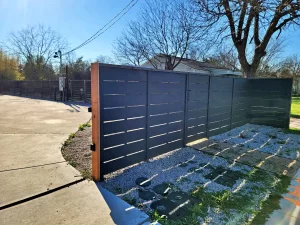
Partial replacement works well in specific situations. If these describe your fence, you can probably save money by fixing just the problem areas:
The fence is relatively new. If your cedar fence is only five or six years old and one section got damaged by a fallen branch, there’s no reason to replace the whole thing. The rest of the fence has plenty of life left. We can match the wood and stain reasonably well, and you’ll get another decade or more out of the existing sections.
The damage is isolated and has a clear cause. A car backed into one panel. A tree fell on a corner section. The gate area got termites, but nowhere else. When damage is localized and the cause is identifiable (and fixable), partial replacement is usually the right call.
The healthy sections are genuinely healthy. This is where honesty matters. If you look at the rest of your fence and the posts are solid, the pickets are straight, and there’s no rot starting at the bottom rails, partial replacement can work. But if you’re seeing early signs of deterioration throughout, those sections will fail within a few years.
The fence style is still available. If you have a standard privacy fence with 6-foot pickets and standard post spacing, matching new sections to old is straightforward. Custom or unusual fence styles can be harder to match, which sometimes makes full replacement more practical.
When Full Replacement Is the Smarter Choice
Full replacement costs more upfront, but it’s often the better investment. Consider replacing everything if:
The fence is already at the end of its lifespan. Cedar fences in Austin typically last 15-20 years with decent maintenance. If yours is approaching that age and showing wear throughout, partial replacement just postpones the inevitable. You’ll spend money patching now and spend more money replacing soon. Check out our guide on signs your fence needs replacement for more details.
Multiple sections have problems. If three different areas need work, and each represents a different issue (one section has post rot, another has broken pickets, and a third is leaning), the fence is telling you something. These problems don’t exist in isolation. The whole fence was installed at the same time, experienced the same weather, and is aging at roughly the same rate.
Posts are failing. Post problems are particularly significant. If posts are rotting at ground level, shifting, or breaking, the structural foundation of your fence is compromised. Replacing a few pickets won’t help if the posts can’t support them. Post replacement is labor-intensive enough that it often makes sense to do the whole fence at once.
You want to change the style or height. If you’re considering upgrading from a 4-foot fence to a 6-foot horizontal fence, or switching from wood to ornamental iron, that’s a full replacement project. Mixing old and new styles rarely looks right.
The cost difference isn’t that significant. Here’s the math people often don’t do: if partial replacement costs 60% of a full replacement, and the remaining sections will need replacement within 3-4 years, you’re not actually saving much. You’re just spreading the cost out while paying for two separate mobilizations, cleanups, and installations.
The Matching Problem
One reality of partial replacement: new sections won’t perfectly match weathered sections. Fresh cedar is honey-colored. Weathered cedar is gray. Even with staining, there will be a visible difference for a while.
This bothers some homeowners more than others. If you’re particular about uniform appearance, partial replacement might frustrate you. If you’re practical about it and understand the sections will eventually blend (or you plan to stain the whole fence), the temporary mismatch isn’t a big deal.
We often get close by selecting boards that have similar grain patterns and aging them slightly before installation. But perfect matches on weathered fences aren’t realistic. Anyone who promises otherwise isn’t being straight with you.
How We Assess Your Fence
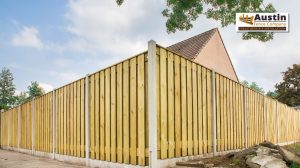
When you call us for an estimate, we don’t just look at the obvious damage. We check:
Post condition throughout. We push on posts and look for movement. We check the base for soft spots and rot. Posts are the skeleton of your fence, and if they’re weak, nothing else matters.
Rail integrity. The horizontal rails connecting posts are often where rot starts. Austin’s clay soil holds moisture against the bottom rails, which causes problems over time.
Picket attachment. Are pickets tight to the rails, or are they pulling away? Loose pickets suggest the rails they’re attached to are deteriorating.
Overall age and condition. We give you an honest assessment of how much life the healthy sections have left. If they’ll need replacement in 2-3 years, we’ll tell you that.
Get an Honest Assessment
We’re not going to push you toward full replacement if partial makes sense. And we’re not going to let you waste money on a partial fix that won’t last. We’ll look at your specific fence, explain what we’re seeing, and give you options with realistic expectations for each.
Contact us or call (512) 900-5735 for a free estimate. We’ll help you make the decision that actually saves you money in the long run.