
Last fall, we quoted a job in Rob Roy where the backyard dropped 22 feet from the house to the back property line. Twenty-two feet. The homeowner had already received two other quotes. One company said they couldn’t do it, and the other gave a number so high she thought it was a typo.
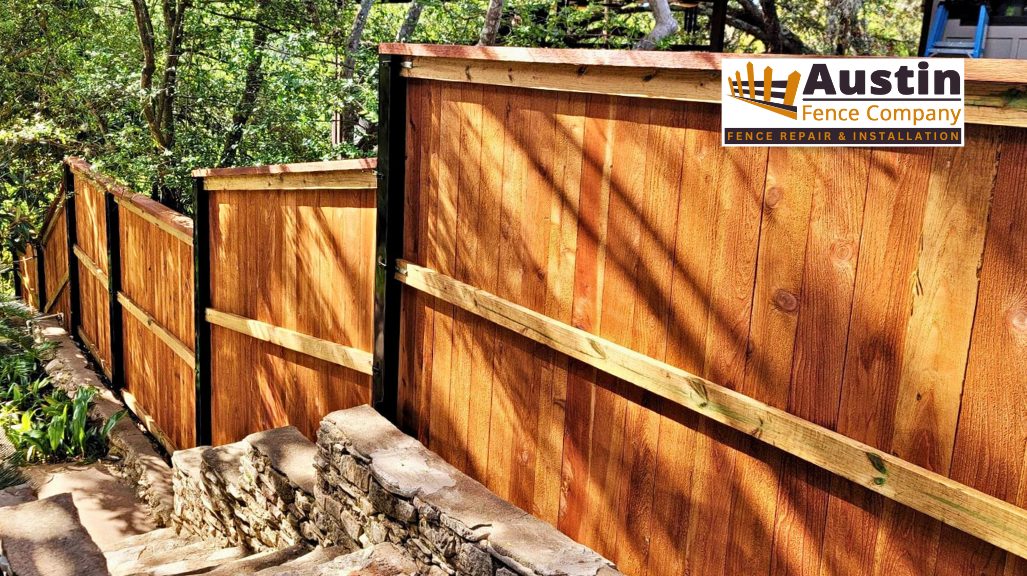
We ended up building her a beautiful stepped cedar fence that followed the terrain down in sections. Took us five days instead of the usual two, and yeah, it cost more than a flat-yard fence would. But it’s been standing solid for over a year now, and she’s got the privacy she wanted without blocking the view from her back porch.
That’s the thing about building fences in Austin’s Hill Country terrain. It’s rarely straightforward, but it’s always doable if you know what you’re doing. We’re Austin Fence Company, and slopes are our thing.
Got a sloped yard that needs fencing? Call us at (512) 900-5735. We’ll come out and tell you exactly what it’ll take.
Stepped vs. Racked: Two Ways to Handle a Slope
When you’re fencing a slope, you’ve basically got two approaches. The right one depends on how steep your grade is and what look you’re going for.
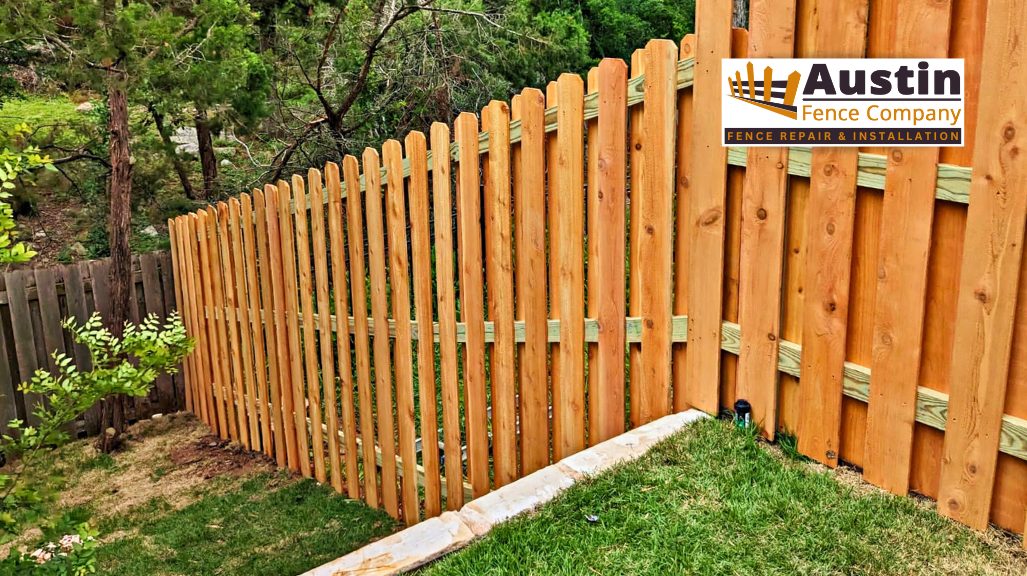
Stepped fencing is what we did in Rob Roy. Each panel stays level, but the whole fence “steps” down the hill like a staircase. You end up with small triangular gaps at the bottom of each section where it drops to the next level. For privacy fencing, we usually fill gaps with kickboards so dogs can’t squeeze through, providing full coverage. Stepped fencing works great on steeper slopes. Anything over about a 12-inch rise over an 8-foot span, we’re probably going to step.
Racked fencing follows the slope continuously. The rails angle to match your terrain while the pickets stay vertical. You get this smooth, flowing line that hugs the ground. It looks fantastic with ornamental iron. We did a rickety iron fence in Barton Creek last spring that just flows down the hillside as it grew there. But racking has limits. Get too steep, and the pickets start looking drunk. For gentle to moderate slopes, though, it’s beautiful.
Some jobs need both. A property in Lost Creek had a gradual slope along one side and a steep drop-off in the back corner. We racked the gentle section and stepped the steep part. Looks completely intentional, like it was designed that way. Because it was.
Why Sloped Yards Cost More (And Why It’s Worth It)
Let’s just be upfront about this. Fencing a sloped yard costs more than fencing a flat one. Usually 15-30% more, depending on how challenging the terrain is. Here’s where that money goes:
Labor. On a flat yard, our crew can knock out 150 feet of fence in a day. On a slope, every single post has to be set at exactly the right height relative to the terrain. Panels need custom cutting. The crew’s constantly measuring, leveling, adjusting. That Rob Roy job with the 22-foot drop? We spent almost a full day just on layout and post-setting before we even started hanging panels.
Materials. Stepped fences need kickboards to fill those gaps at the bottom. Racked panels often need on-site modification. Sometimes we need longer posts to handle the grade. All of that adds up.
Equipment access. Getting our equipment up and down a steep slope safely takes time. Some areas are only accessible by hand-carrying materials. We’ve had jobs where we parked the truck at the top of the hill and hauled everything down by hand because there was no other way.
Here’s the thing, though. The extra cost is worth it. A fence that’s properly installed on a slope stays straight and solid for years. We’ve seen cheap jobs where the installer tried to take shortcuts. Within a year, posts are leaning, gaps are opening up, and panels are pulling apart. You end up paying twice.
The Austin-Specific Challenges We Deal With
Slopes are one thing. Austin slopes are another. The Hill Country throws some specific curveballs:
Limestone bedrock. In areas like Westlake Hills and West Austin, you can hit solid rock six inches down. Standard post hole diggers just bounce off it. We bring core drills and rock anchoring systems to every job in 78746 because we know we’ll need them. Last month in Rollingwood, we hit a limestone shelf that ran the entire length of the fence line. Drilled right through it, anchored the posts with epoxy, and that fence isn’t going anywhere.
Erosion. Slopes erode, especially during Austin’s heavy spring rains. We had a customer near Bull Creek whose previous fence installer didn’t think about drainage. Three years later, the soil had washed out from under two posts and the whole section was leaning downhill. We consider water flow on every sloped installation.
Trees everywhere. A lot of Austin’s sloped properties are heavily wooded. We’re navigating around mature oaks and cedars while also dealing with elevation changes. Sometimes we have to adjust post placement to avoid major roots. It’s like a puzzle, but we’ve gotten pretty good at it.
What Materials Work Best on Slopes
Some fence types handle slopes better than others:
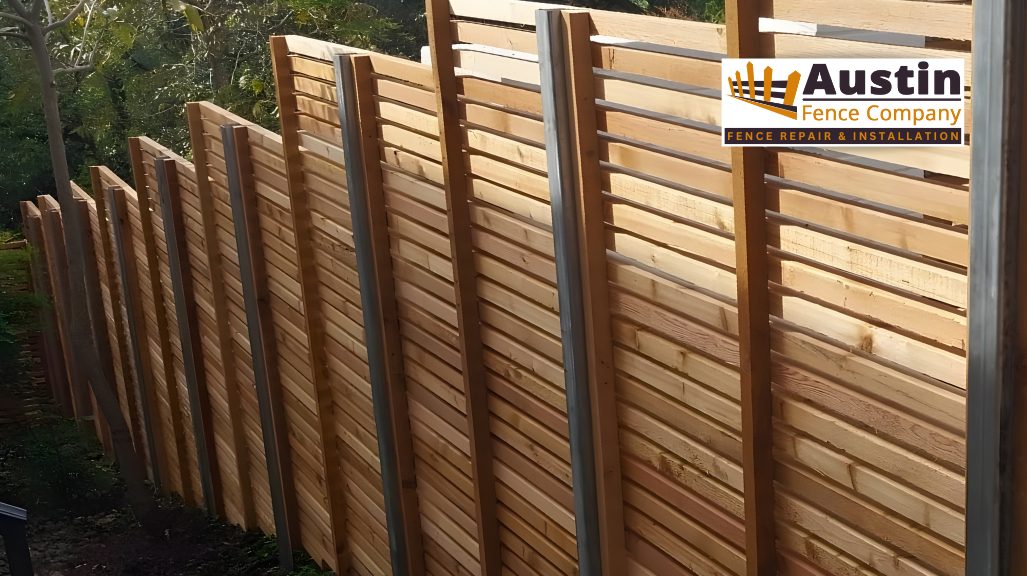
Cedar wood fencing is the most versatile. We can step it, rack it, or custom-build sections to handle whatever your terrain throws at us. Individual pickets can be trimmed to follow contours perfectly. And cedar looks natural against the Hill Country landscape. It just belongs there.
Iron and aluminum fencing can be installed beautifully on gentle to moderate slopes. The vertical pickets stay plumb while the rails angle with the grade. That Barton Creek job I mentioned earlier? The homeowner specifically wanted iron because she’d seen how good it looks on sloped properties in the neighborhood.
Chain link is flexible by nature, which makes it forgiving on uneven terrain. For large acreage properties with significant grade changes (and there are plenty of those around Bee Cave and Lakeway), it’s often the most practical choice. Black vinyl-coated chain link practically disappears against the trees.
Let’s Look at Your Slope
Every slope is different, and honestly, there’s no substitute for walking the property. We need to review the grade changes, check for rock, identify any drainage issues, and determine the best approach for your specific situation.
Request a free estimate or call (512) 900-5735. We’ll come out, walk your property with you, and give you a realistic quote and timeline. No surprises, no shortcuts. Just a fence that’s built right for your terrain.