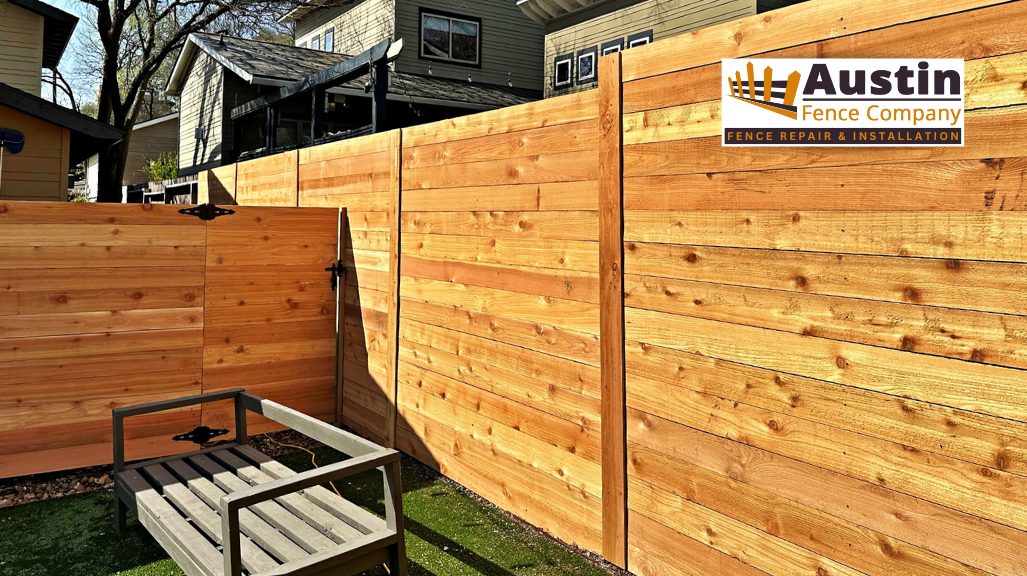
West Lake Hills protects trees at a much lower threshold than Austin proper: virtually every tree over 8 inches in diameter falls under city preservation rules, and the WLH city arborist reviews fence work on a case-by-case basis. On the typical 1-acre-plus WLH lot with 30 or more mature trees, that changes fence planning from an installation exercise into a site-planning one. Here’s what you need to know before you start, and how we handle WLH fence work end-to-end. Ready for a tree survey and fence plan? Request a free estimate, and we’ll come out.
How West Lake Hills Tree Rules Differ from the City of Austin
Austin’s Heritage Tree Ordinance applies to trees with a DBH of 19 inches for six protected species. West Lake Hills is stricter across the board. The WLH tree preservation code protects any tree with a trunk diameter of 8 inches or greater, regardless of species, throughout the city limits. That’s more than a 2x reduction in the size threshold, and it removes the species-list filtering that Austin applies.
The practical impact: on a typical WLH lot, you’re likely working around dozens of protected trees, not one or two heritage specimens. Every red oak, cedar elm, mountain laurel, and Ashe juniper over 8 inches DBH counts.
The city also carries protection rules for smaller trees inside specific hillside overlay zones where erosion control depends on the canopy. If your lot is on any of the steeper WLH terrain, expect the tree survey to include trees below the 8-inch threshold as well.
The 8-Inch DBH Threshold and What It Covers
DBH means diameter at breast height, measured at 4.5 feet above natural grade. For multi-trunk trees, the code aggregates trunk diameters using a defined formula that varies slightly by species group but generally counts the largest trunk plus a portion of the smaller ones.
What the 8-inch threshold covers: essentially any tree that a homeowner would consider “mature.” A live oak with an 8-inch DBH is roughly 25 to 35 years old in the WLH growing environment. A cedar elm of the same size might be 20 years old. Both are canopy trees that took decades to establish and can’t be replaced in any meaningful timeframe.
The city also treats specific hillside species (like Ashe juniper) as protected below 8 inches when they serve an erosion-control function. On steeper WLH lots, the site plan may need to preserve juniper stands even at 4-6 inches DBH.
Mapping Trees Before Planning the Fence Line
The typical WLH lot ranges from 0.5 to 2 acres with anywhere from 30 to 100 mature trees. Before we can draft a fence line, we need to know where every protected tree is, how large it is, and how its Critical Root Zone overlaps with the proposed fence route.
On any WLH fence job, we start with a tree survey conducted by a certified arborist. The survey documents every tree over 8 inches DBH within the project area, notes species and DBH, marks the CRZ boundary (using the same 12-inches-per-1-inch formula Austin uses), and identifies any hillside preservation zones. The survey becomes the base drawing for the fence plan and the document we submit for city review.
Once the survey is in hand, we’ll draft the fence line to minimize CRZ encroachment. Our main fence-around-tree guide covers the general construction techniques we use within any CRZ. This spoke focuses on the WLH-specific site planning and permit workflow.
The West Lake Hills Permit Workflow
WLH fence permits are handled by the city’s Development Services, and any fence work that affects a protected tree’s CRZ requires a mandatory city arborist consultation before the permit is issued. Unlike Austin’s review process (which can be handled via document submission), WLH typically requires the city arborist to visit the site.
The workflow: submit the tree survey and preliminary fence plan through the WLH permit portal. The city arborist reviews the documentation and schedules a site visit, usually within 2 weeks. On-site, the arborist walks the proposed fence line with our foreman, identifies specific trees that require extra protection measures, and issues a written list of conditions.
Once the condition list is documented, we revise the fence plan to reflect the arborist’s requirements and resubmit for final permit approval. The total timeline from initial submission to approved permit typically runs 4 to 6 weeks. On complex projects with hillside considerations, plan on 6 to 8 weeks.
Fence Designs That Preserve Mature Canopy on Hillside Lots
Not every type of fence works on the typical WLH lot. Solid privacy fence panels channel water and disrupt airflow around root systems, both of which stress mature trees over time. Chain link with mesh openings preserves airflow and water infiltration, but rarely fits the aesthetic WLH homeowners want.
Our default recommendation for WLH lots is ornamental iron fencing, which preserves view corridors, allows air and light through the canopy, and can be routed around individual trees with curved sections. For lot lines where visual screening is required, we’ll typically combine iron with dense native plantings rather than solid privacy panels. The plantings mature into the screen without the fence itself blocking canopy respiration.
Where a privacy fence is truly required, we recommend a cedar privacy fence with wider-than-typical picket gaps (1/2 inch instead of 1/4 inch) to preserve some airflow. On steep hillside sections, we’ll step the fence down the slope rather than running it flat, which reduces the volume of soil displaced during installation.
How We Handle WLH Fence Installation End-to-End
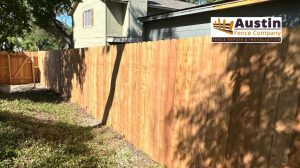
Since 2008, we’ve installed fences on West Lake Hills lots ranging from Rob Roy to Hills of Lakeway to the older Cat Mountain neighborhood. We treat every WLH job as an ordinance-triggered project from the initial site walk, because virtually all of them are.
On the initial site walk, we’ll walk the property with the homeowner, note obvious canopy corridors we want to preserve, and identify any trees close to the 8-inch threshold that’ll need arborist measurement. If the ordinance applies (and it almost always does), we’ll coordinate the tree survey through our arborist partners.
We’ll handle the WLH permit submission, coordination of the city arborist’s site visit, and any subsequent revision cycles. Fence construction starts only after the final permit is in hand. On the build, our foreman follows the arborist’s written condition list literally, and we’ll use hand tools inside every CRZ.
We’re fully insured on every job, we carry a written 1-year workmanship warranty, and we’ve earned 134 verified Google reviews averaging 4.9 stars. Have a WLH fence project in mind? Get a WLH site walk from our team before the design work goes further.